• About.
  • Contact

The Most Important Thing You Will Ever Read*

  • Somewhere Along 26th…

    April 26th, 2024

    Though I am sure there are more streets that have such a charm, one unique thing about 26th avenue is that at certain points, you can see the shimmer of downtown Denver from the plain old suburbs as the car you’re driving crests the high points in the road. 

    To me, this always felt like a periscope to something better than what I had. A chance to peep above the surface and see something beyond the fishbowl I was living in. 

    The road itself forms a neat artery from Applewood, which is west of Denver proper, into downtown, where it eventually hangs a sharp left and intersects with Speer boulevard. 

    In Wheat Ridge, sandwiched between the city and the tiny suburb, 26th creates the southern border of Crown Hill Park and cemetery. If you cut through the old neighborhoods with the big, beautiful cottonwood trees going north from Colfax, you would meet the silver chain link fence, just beyond that, a forest of marble and granite headstones, all of them similar in their uniqueness. 

    Only someone with the sentimentality of an 80’s baby living in the 90’s could appreciate the way it created (literally and figuratively), a road home from almost all points. You would have to have been born without an internet connection to understand the value of such a road. 

    Venturing into the new world west of what I had always known was tough, but 26th felt like a lighted runway home in the dark. It was the road my mom took to her new job. It was the road I walked to my new school. The house that my grandparents lived in was on 26th, just a mile or two down from us. Some of my new friends lived within a block or two of it. It became a tether that let me wander further and further, learning more about my new home and more about myself. Even to this day, sitting in the seat of a plane heading west, I can literally see the most of my life, at least the formative stuff, and it all happened along a short strip of asphalt labeled with just a number. 

    The independence that came with that was somewhat new to me. There was a naïveté in the air of Edgewater. I felt like danger was around every single corner in Denver, and it usually was. From kids just like me looking to make a name for themselves, or the older brothers of those kids, looking to slice me up or throw a couple stray rounds at us for walking through their block.

    Explaining my apprehension to simple tasks like walking home or the caution I learned to exercise in the dark was funny to the new friends I had made. They thought I was paranoid. Better safe than sorry, I suppose. 

    My room in the apartment we had faced west and at night, I would open the aluminum sliding window and stare out into the sodium lamp-orange darkness at what I felt like was my future. 

    My first year of high school was unremarkable. I took the normal slate of courses one would expect of a freshman, I attempted to glom onto any clique that would accept me. I lusted after girls that I lamented about in bad poetry, having talked to exactly zero of them. I discovered AOL chat rooms on the public computer at Edgewater Library. I dressed in baggy clothes that transcended any particular subgenre of teenager and devoid of anything one could call “style”. I listened to the radio nonstop, and like most other kids my age, made a random genre of music my entire identity for a little while. 

    At the time, my dad was working at the janitorial company. When you’re young, you view anything your parents do with such reverence. He was a “general manager” of a company that cleaned office buildings, which in my mind was damn near a presidential level of responsibility. I would toss these words into conversation with my friends to make sure they knew how serious this job was.

     I would go with my dad to their office, which had a small front-of-house office and a large warehouse with inventory of cleaning supplies tucked away in the back. There were several other employees that worked for my dad, all smokers, all old, all gross. They would gather at a picnic table in the back and complain bitterly about the owner who was a rather large, delightfully animated man named John. An east coast kinda guy if you’ve ever seen one. Slick talking, fast. Wheel and deal. You know the type. They would ask constantly about what I was going to do with my life. And staring in the face the future that these people chose eliminated at least one possible route. 

    There were jokes amongst the employees about the entire operation being a way for John to disguise some drug sales empire, but I think the truth was probably closer to him occasionally dabbling in some recreational cocaine, a theory that would be supported by hearing my dad sniffing in the bathroom every now and again during his benders while he was employed by the company. 

    Some weekends and during the summer, I was given a job to assist with the crews that would go and clean large offices for real estate companies, or accounting offices. One notable place was the Genesee headquarters of an air cargo company called Atlas Air, which as of this writing, was still operating, although in a different city. 

    I would get picked up around 6 pm, right after my mom fed me. A white van with the JL logo would pull up and honk. An older gentleman named Larry would be waiting, smoking, and listening to the Steve Miller band. To this day, I can still smell that van. The acrid stench of BO and cigarettes was enough to make me gag a few times. I would roll the window down all the way up the I-70 corridor, about an hour west of Edgewater. The air would almost always recirculate through the van and create this vortex that sent the smell right back in my face. 

    We would arrive at these big commercial buildings in the late-yet-light hours of summer. Unlocking closets and getting supplies, carting around a vacuum or trash can. The routine for most of the buildings was called “ash and trash”. Throw trash out, add new liners, dust the surfaces. Wipe handles. Long carpet would get a quick vacuum. Easy peasy. 

    One memorable night, I went up with my dad. We drove into the parking lot of one of the buildings to see one of his cleaners outside, hysterically crying. She ran up to the Jeep and told my dad that there was a dead guy in the hallway. He told her (and me) to stay in the Jeep, running inside to see what happened. 

    Naturally, I crept behind him into the building to take a look for myself. He walked fast through the lobby to a long narrow service corridor. I waited for a moment and then ran behind him. I stepped next to the hallway without stepping inside, imagining that I looked the way a SWAT officer would, prior to clearing a room. I stuck my head into the hall to see my dad standing and facing a heap of clothes and tools piled up awkwardly in the corner of the hall. A small step ladder beyond that, leaning against the wall. I could see the man’s shoe and ankle, bent unnaturally against the wall and the floors. I could see his hair, his head facing away from me. His cell phone was ringing nonstop. Creating an eerie alarm through the echo-ey corridor. 

    We went outside and my dad called the police. They showed up rather quickly, dutifully taking statements from the woman and my father. After about an hour, a cop came outside to tell us we could leave. My dad asked what happened. The cop said the man was an electrician. He grabbed his ladder and went to do some work above the dropped ceiling. Since the power was still on, his best guess was that the man tried to perform some work without shutting it off. Taking a small-voltage zap, he fell off the ladder, breaking his neck. He guessed it was probably just a few hours before. 

    We checked on a few other buildings and then left. The drive was quiet. My head was spinning. I couldn’t imagine who was on the end of the phone. Was it urgent? Were they worried? I wanted to know more. 

    I could tell that my dad was thinking about it. There was a weird apprehension in the air. My family has always struggled with how and what to say during these intense emotional moments. Rather than risk saying the wrong thing, most times they opted to say nothing at all. Leaving me to process complex emotions on my own. 

    Death was a complex and taboo subject around my house. Just a few years earlier, but back in the different world that was our duplex in Denver, a friend of my father’s, Dan, came over to have dinner with us. The details of this dinner are so clear to me, because unlike other nights from that era, this is the night I discovered death. 

    Now, to be clear, no one died. Not at my house, at least. But along with the stench of stale beer, sawdust and Marlboro Reds that Dan brought with him, he also brought a VHS copy of a movie called Faces Of Death. After the delightfully prepared cube steak that my mother prepared, we sat down a few feet away in the living room and started the movie. 

    The next hour and a half or so was a wild ride. Looking back on the footage now, it’s hard to take it seriously. Although there are very much parts and pieces that are real, the rest is so goofball-cheesy that it’s hard to take seriously the impact that it had on me. But for me, it wasn’t the death (or fake deaths) of the people that I saw on the screen as much as it was a cold steel wedge of reality that the people near me, the people that I knew and loved, would eventually die. And although I knew of death, the concept was painted for me without the deep black of finality that I had suddenly been shown. 

    The rest of the night was a paranoid half-sleep where I meticulously imagined the deaths of mom and my grandmother. Several nights after that, after a similar paranoia, I woke my mom up by pretending to have a loud nightmare. She came into my small room to see if I was okay. I described to her in depth, that I was worried about her and my grandmother dying; that I saw their funerals and their cold faces in crisp white caskets. I cried hard into her shoulder and eventually fell asleep. To this day, I don’t know what decision-making breakdown made my dad show me that movie, 

    Back to my night job, and despite the dead-guy thing, most other nights were actually pleasant. I made decent money wandering around buildings, listening to two or three tapes I had stuffed in my pockets on my Walkman. To be clear, I was living in the CD era, however, if you are old enough to recall, the first-gen Discman skipped like crazy unless you clicked the “skip protection” button, which if you know that, you would also know that it drained the batteries. And those weren’t the rechargeable kind. Tapes were cheaper and never skipped and were super easy to carry a couple of in your hideous fucking cargo pants. My favorite part of the evening was getting to go back to the office of a company called Atlas Air. They had an amazing break area with a soda fountain, and there were large model airplanes everywhere. Huge cargo 747’s with no windows, aimed skyward and heading towards nowhere. The scale of them was almost as grand as the real birds. The trademark hump, the large tail, emblazoned with the gold Atlas logo of the titan holding the earth but in a minimalist gold wireframe outline. The owner of the company had an office that looked more like a conference room. Large Persian rug that looked like a runway towards a gorgeous wooden executive desk. Airplanes, globes, and memorabilia of aviation adorned the shelves. It was magnificent. I felt like the brainless scarecrow, seeing the majesty of Oz. What could this man possibly do to require such luxe accommodations? I wasn’t sure, but I know that I wanted it. All of it. 

    The details of that office are hazier than I wish, but the feeling impressed upon me was heavy and deep. There was this magnetism in seeing someone create so much from nothing at all. I loved the perspective of it all. I wanted to see and know more about commerce. The exchange of dollars, the suits, the talking about numbers. It was all I could think about. I spent the summer in the same routine. As August rolled around, I went back to school and left that job and those people. 

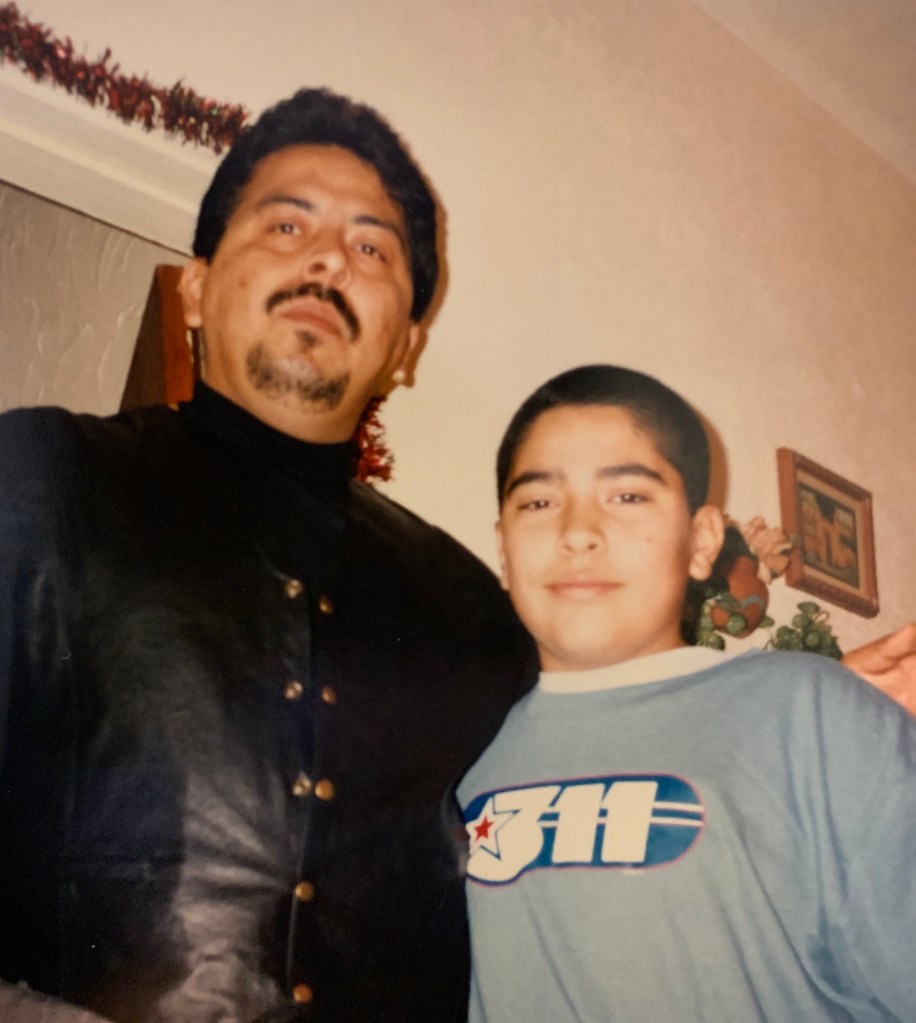
    The Christmas of that year was one of the best in my life. Every year that my dad was home for Christmas, he was consumed with buying gifts for my sister and me. The weeks leading up to Christmas, he was stopping at the mall almost daily for new stuff. Sneaking things in the house under blankets, hiding gifts in the closet. Opening them would take so long that it would turn into a chore. The first few gifts, we would stop and carefully admire, showing it to the room before casting it aside for the next one. Wrapping paper would fall to the ground around us, creating an ocean of trash we would wade through, grabbing more and handing them out to on another. Clothes, toys, leather coats, chess sets, video game consoles, CD’s, jewelry.  

    During the holidays when my dad was sober, my parents would interact as two people in love, giving us a rare glimpse of them free from the normal level of irritation between them. To think of them now, as a couple of kids in their early 30’s doing their best to navigate adulthood and parenthood makes it easy to dull any criticism I may have for their parenting or the product of it. 

    People can hang any poor result on their parents, and many of them do, but the reality is that most everyone is just doing the best they can with what they have. My parents were no different. 

    In the first month of summer after I graduated high school, my mom and I sat together watching a movie. The phone rang and the other end was a party that I was invited to earlier in the week but declined. I said hello a few times and finally heard the voice of a couple friends, asking, or rather, telling me that they were on the way to get me. I said no and hung up. Sitting back down to finish the movie with my mom. Eventually, her curiosity got the best of her, and she asked who it was. I told her it was my friends wanting me to go with them. 

    My dad was gone, having left on a particularly harsh bender. As usual, there was a fight. But as I got older, I could see the pattern long before the clash. He would come home a little later each night. A year or so earlier, he quit the janitorial job, supplementing his income by working with an old friend from his time in prison. Together they worked on a crew framing houses. For everything he was and wasn’t, he was a hard worker. 

    I would get this feeling in my stomach that tonight would be the night that he just didn’t show up, or worse, he would come home drunk. The fighting would start, and the world would fall apart for a few weeks. No sleep, all worry. But sometimes he would eventually walk in, covered in mud and dust and I would feel terrible for not giving him the benefit of the doubt. Those times weren’t ever as frequent as I would have liked, but it did happen. 

    My mom didn’t want me to feel stuck at home with her. She was usually one to turn in early anyway, so a little gentle persuading and I called them back. About 30 minutes later, I was in a beat-up Honda driving off into the dark. 

    The night was a blur, as most of them are now. Some mix of restaurants, music, cigarettes, laughter. The Honda buzzed back down 26th avenue a few hours later. One of us sleeping in the back, two in the front talking about nothing at all. 

    The artery that was this road afforded the ability to see far in the distance. The apartment we lived in sat just a few feet from the edge of the road, giving me the unique luxury of seeing where I lived from very far away. As we crested one of the many hills along the road, I could see the unmistakable blue and red lights of law enforcement burning a colorful haze into the dark of the night. 

    I would imagine that when faced with the theater that is an emergency situation most people don’t assume they’re part of it. That was never the case for me. I always knew that the cops were there for me, or more likely, my family. Tonight was no different. 

    “I wonder what is happening up there” someone in the car muttered, but I already knew: my dad came home. 

    The car approached the colorful mess and slowed and without even allowing it to stop completely, I poured out of the passenger seat with a knot in my stomach and a suddenly dry mouth. Walking through the lot was like weaving through a showroom of emergency response vehicles. Police cars and ambulances, even a fire truck. I could see the unhiding faces of my neighbors staring out of their windows towards the spectacle of my family, the yellow light of their apartments making bright wedges against the dark of the brick apartment façade. 

    As I approached the door to my place, a very unwelcoming police officer with a severe bleached-blonde flat top stopped me. “You can’t go in there”, she said, placing a hand firmly against my chest. I reached past and pushed my way in, with her only stopping when I said “I fucking live here.” 

    In the brief moment, with the mess of “help” around me, and someone “guarding” me from entering my home, I couldn’t help but think that I was about to walk into only one outcome: that my father had killed my mother. 

    Walking in and seeing my mother on the couch was a relief unlike I had ever felt before, short-lived, however, because I knew something had still taken place here. My mom sat tiny and frail on the tan leather couch, sandwiched between two women. One was our landlord, the other I didn’t know. 

    I walked over quickly, hugging my mom and asking what happened. The woman I didn’t know introduced herself to me as a “victims advocate”. So now we were victims, and we needed this woman. 

    There’s a unique phenomenon that comes with growing up with someone as destructive as my father. There are constantly people involved in your life in some capacity intended as help. Injecting the cold administrative arm of the government in our lives was a reward for loving this man. This unremarkable woman was just the next in the line of people that we would be receiving unwanted “help” from. Moments when a place you only knew as a room of comfort or utility, like a living room or a kitchen suddenly became something else. Filled with people you don’t know. Using the same counter that your grandmother gently rolls tortillas on to fill out a contact report. The swish and crackle of velcro on utility belts filled with weapons and restraints against the soft of the cushions your mom places under your head when you’re home sick from school. 

    Follow-ups and circle backs, all the while doing as much as we could to make sure we seemed just fine to remove the probe of bureaucracy from our lives. 

    If you were to build the courage to grab your dad by the face and scream all the things that you hated about the things he did, you would never mention this, but this minor invasion of the places you didn’t think were sacred until you saw them severed and smeared with “help” was just another tug at the threads making up who you are. Of all the indignities, the injustices, the hurts and the bumps and the bruises you would present as evidence, this wouldn’t make the list, but oddly enough, when the bumps go away, and the bruises heal, these are the things you remember. 

    Not the blood, or the broken glass. 

    But the black of a police uniform juxtaposed against the honey almond floors in your grandmother’s dining room. 

    Sitting next to my mom on the couch, I was told the events of the evening that I missed. Not too long after I walked out of the door, he started calling the house. The message wasn’t important, but he made it clear he was coming home for either his stuff or for revenge. My mom made it clear that should he do that, the cops would be called, which incensed him. Not long after the calling stopped, he came home to a dark apartment, with the doors locked to whatever capacity they could be, and my mom hiding in the closet in my room. To this day, it pains me to imagine the fear she had while sitting there. It pains me more to know how much of her life she had devoted to this man only to find herself in such a terrible position, literally and figuratively, over, and over. 

    I imagine that him banging on the door was loud enough to immediately involve the neighbors, most of whom also made the decision to call the cops. As he realized that she wasn’t going to open the doors, he took his fists and began breaking the single-pane windows from the back of the apartment. The sound alone was enough to send my mom into a panic, calling the police again and again. About the time he was attempting to climb through, some of Edgewater’s finest were arriving on scene. Running up to the mess he was creating, shouting at him to stop, my father wheeled around and started swinging wildly towards the men. As most of us are aware, the police don’t take kindly to such things and these gentlemen dispatched him accordingly. Seeing him in jail a few days later, it was quite literally written on his face just how much they didn’t like that. 

    The aftermath of this event felt a little different. When the lights turned off and the helping and guarding and swarming subsided, it was just us again. A few hours previously we sat on these same couches, free of court dates and victims advocates. Free from the pity and anger of our neighbors who were dragged out into the cold night to watch our disaster unfold. We were now left to wipe up blood and sweep glass shards into the trash. Literally and figuratively picking up the pieces. 

    Although none of these episodes with my dad were ever anything to be proud of, this one had a particular air of humiliation to it. We had gone such a long time without unraveling, we were stupid enough to believe that maybe… just maybe, it was over with. That we could live and survive and even thrive as normal people. That we could be the people that worked hard all week, ate normal meals, went to bed at normal times, took short vacations always by car, walked the flea market on Sunday mornings, visited friends to watch the game, took walks after meals, saved money, didn’t hide bruises, didn’t lie about crying all night, didn’t have to clean one anothers blood from the floor, didn’t have to call parents at 3 in the morning to post bail, didn’t get the hinges of your doors ripped off by police executing a warrant, didn’t take an ambulance ride after OD’ing… But it couldn’t ever be that easy. We could never be those people. My dad always pulled us back in spectacular fashion. 

    The next few days were dotted with the uncomfortable interactions from friends and neighbors asking if we are okay. 

    What happened? 

    Where is he now? 

    Is your mom okay? 

    So on and so on. The anger in me saying to myself “it’s not their fucking business” and the shame in realizing that we made it their business. 

    After a few days, a letter arrives from the Jefferson County Department of Corrections, addressed to me but certainly written with the intention of her reading it. A preamble of superficial love. A hasty apology. A long list of the things he would need us to help with. Money, firstly. 

    This event was remarkable in that it was the first time that my mother let me make the decision as to whether I wanted to respond to him. I sat with it for a day or so and wrote back. I don’t recall what I actually wrote. It wasn’t particularly consequential, after all, what could I say? That it was okay? That I understood why he did it? I think I just told him about my new job, working graveyards at CoorsTek. 

    He responded quickly, asking for me to come visit him in the county jail. A few days later, on a rare day off, that’s what I did. 

    The Jefferson County detention center is a large six or seven story facility that looks like a set of handcuffs when viewed from above. The building is imposing. It has a presence to it that conveys the singular purpose of it. Walking in the building I see the slick glossy floors and row upon row of chairs. The lines in the floor draw your eyes toward a glass and steel cube housing two guards that are not in the mood for a teenager, inexperienced in the interactions that require such paperwork and proof of everything. 

    After getting my paperwork in order at the merciless inconvenience of the guards, I sit and wait. Visitors get to come up at certain times. I am early and I am required to wait about an hour for the next group to go up. A few more people file in, taking care of their sign-in and sitting near me. Together a large guard takes us to an elevator and in a few seconds, we are on the floor. Walking out of the elevators, I am led to a long hallway, on both sides, booths of concrete and steel with telephones against the wall. It’s exactly like every prison movie I have ever seen. The thought is somewhat amusing to me. I am told to go all the way to the end, and he will be on the left. 

    As I approach and turn, I see him there and whatever humor I had about the moment was stricken from me. The walls of gray and the large steel frame of the thick, scratched glass create a picture frame around the stark orange of his jumpsuit. He looks like a portrait painted on a sad gray canvas. His face swollen and bruised. His hands are black and blue and covered in cuts. Until that point, I hadn’t ever really felt sadness towards my dad. I usually hovered in the anger column of my feelings, but this was different. He was caught in the consequences of his actions. There was no escaping this. The devil that pulled at him caught him again. 

    This was the beginning of the era where I stopped seeing him as my father, and I started seeing as a son. Not my own, but as the child of someone. A baby boy, once held and revered as they always are, as something special and amazing. Someone who would change the world. Some tiny thing that you pray and hope and worry over. And here he is now, having not changed the world, but having reached a curious hand behind the curtains for a peek of a life less ordinary, and gotten pulled into the cogs and gears of a very unforgiving machine and spit out the other end, bloodied and battered. 

    Alcoholics have a talent for blaming other things and they only take credit when doing so makes them appear in control. I can recall in countless conversations overhearing my dad tell people that he decided he was done but neglecting to say that he was arrested or somehow unable to drink otherwise. Being one of the most charming men that I have ever met, there was always someone who believed what my dad said, and when the equilibrium in my own life was at stake, I usually did, too.  

    But here together, sitting in this fortress, with him wearing the bleeding cuts and bruises of his actions, with the stark-naked corpse of the truth laying here between us, what he mustered up was: 

    “You know I would never hurt your mom”. 

  • Well, Not Exactly The Beginning…

    April 20th, 2024

    I woke up in a bright room. Small. Smeared in the art and subculture of the mid 90’s. At every crease and corner, the overlap of boyhood and manhood. My collection of belongings spanning the gap of two eras in my life. Toys on shelves next to books of German philosophy. I still had some stuffed animals that my grandmother had given me, but I also had posters of half-naked Supermodels that I got at Spencer’s at the mall, purchased by the very same grandmother. Funny how that goes. 

    In the air, the unmistakable aroma of weed pressed its way through my closed door. The fan next to the bed buzzed and rattled the posters on the wall.  I could feel the thump of bass reverberate through my bed. It was 9 am on a warm Christmas Eve, 1994, and I was pissed. 

    In the kitchen, my dad was busily cooking breakfast and smoking weed. Weed was a lifelong habit for my dad that somehow always flew under the radar of all the things he was occasionally abstaining from. California sober. The lesser of two, I suppose. I hated the smell of it as a kid. I still do. Waking up to it was worse than walking into the house after school and it smacking you in the face, but both were enough to make me irritable.  

    The bass from the stereo shook the cups on my nightstand. 

    Throughout my dad’s history of leaving us and then eventually coming back, the stereo was always there. He would leave, and then pawn or sell most of the belongings he could carry, and eventually he would return, and the first thing he would acquire when he moved back in was a new stereo. This stereo was the biggest that I can remember. A head component connected to massive speakers pumping music throughout the tiny duplex that he, my mother, and I lived in. Typical weekends would find her at work, and he and I lounging around, spanning decades of music, WAR, Led Zeppelin, The Isley Brothers, Van Halen, Eric Burdon and The Animals, Malo, Tower of Power, Metallica. Stacks and stacks of tapes and eventually CD’s of who’s music would eventually paint the background of my life. 

    I had a theory for a long time that as teenagers, we overvalued music. Placing way too much importance on what it actually did for us, but as I reflect now, at almost 40 years old, I couldn’t imagine my life without those songs, which so perfectly captured what I felt, or as it were, what I knew that I would feel someday, about someone or something. 

    Dad was making what he called a “wiglaoo”, which was essentially a casserole made of eggs, cheese, sausage and potatoes. He learned to make this in prison, is what he said. 

    Since he had only very recently been let out, there were a lot of stories and a lot of things that he learned in prison that he brought home for us.  These random knacks and tricks for drawing or cooking gourmet meals with convenience store ingredients. How to make necklaces from unraveled sock threads. Ink made from ash. The convict origami of folding paper into an envelope. All of these were like magic tricks to my 12-year-old brain. Each and every one I would share with my friends at school as soon as I possibly could, to soak up a bit of the street cred that I thought came with having an ex-con father. 

    I still don’t know what it is that made that stuff seem so appealing. Was it the fact that most kids are just impressed with who their fathers are? Or was it the glitter-in-the-gutter that 90’s popular culture was beginning to embrace? I don’t know. When he was in prison, he would occasionally send home things he had created. Some random craft project that he had worked on. He would usually replicate designs or logos of things that I was currently into. Most recent, a small yellow stock card with the Mortal Kombat dragon logo on it. Handwritten greeting cards with his own amazing penmanship on display. 

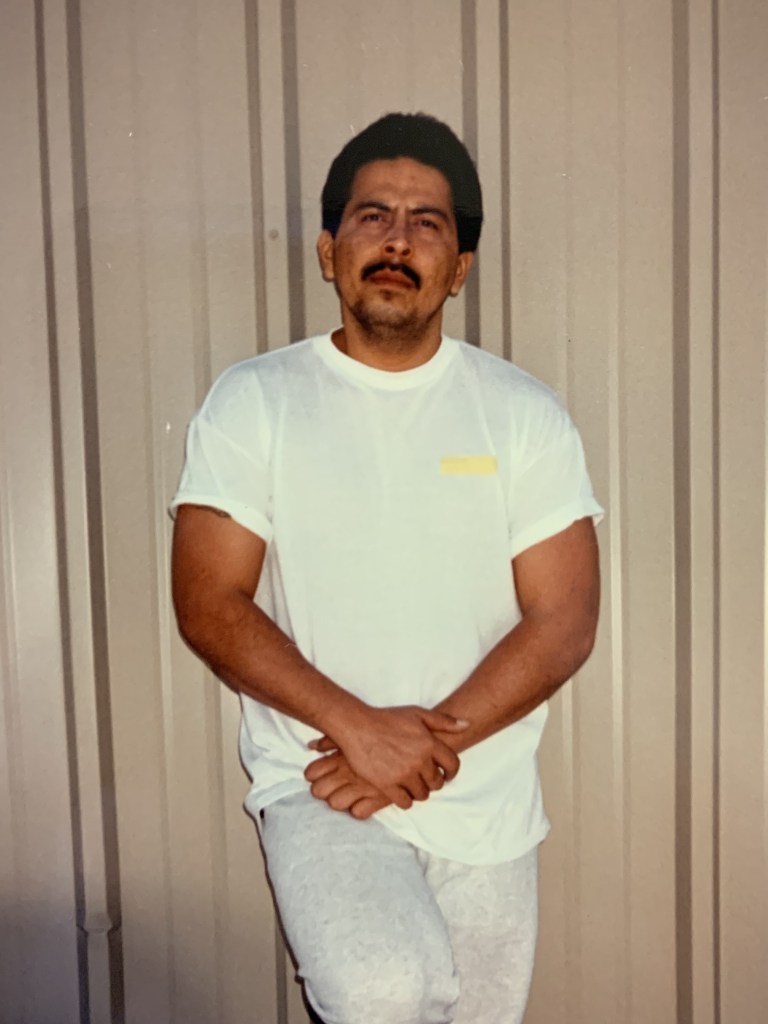
    He came home with a wardrobe of white shirts with faded yellow patches on the chest that once had his Department of Corrections number on them. Red Kap Jackets and Dickies pants that had the unmistakable look of a recent prison release. All of which I clamored for immediately, and even though he was 6’ 2” and I was definitely not, I still wore them wherever I could and with an unusual pride. 

    My father was released on parole earlier that year and he was only let out provided he was leashed to a smattering of restrictions regarding work and alcohol consumption and God knows what else. Although the joy of having him at home was overwhelming, it was a radical change from the only-child life I was living. (Not actually an only child, I have a sister who is 2-ish years older than me, but who rarely lived with us.) 

    The only-child life existed between my mother and me. In the beginning, it was her and I. Dad would come home and reshape the dynamic to her and him, and then me. And eventually, when things fell apart, it was her and I that picked up the pieces together and continued to be a family. I always felt this tremendous sense of “welp” as we sat alone again, trying to pick up the pieces. 

    When he was gone, I had the run of the place. When we bought groceries, I got to pick everything. I stayed up until I wanted to go to sleep. I ate what I wanted and watched what I wanted. I was reaching the age where I was still excited for Christmas, but I didn’t want anyone to know. In my mind, I was certain of a great and many things, an expert on all-things music, an at-home Jeopardy champion, a professor of middle school sociology. In the real world, I was a scared little boy who was elated to finally have my father home. Him coming home ended the constant interaction I had with my mom. Sunup to sundown. They needed their time alone, watching movies or going to the store. I was left to my own to grow up and do young adult things. 

    I stumbled from the room and landed heavily on the couch. Before I could settle in, he called me over to the stove where he carved a huge slice of the monstrosity he cooked. We ate the wigaloo together and washed it down with Nestle chocolate milk. The powdered kind that came in a metal tin. The kind that you had to mix yourself. We typically read the paper together. Like a gray and gritty tablecloth, The Rocky Mountain News almost always covered the table at my house when my dad was home. 

    As we sat on the couch after gorging ourselves, he said “Get ready Gato. let’s go see your uncle Gerald”. I can still recall the pit-feeling in my stomach from each and every time we had to go see him. 

    As I sit here writing this, I realize that there are many things about my father and our life together that I have never actually verbalized, certainly not to him. Here is one: As a child, I hated my uncle Gerald. He was a degenerate alcoholic, who, from the stories I have heard, was violent and abusive to everyone around him, especially my father and those closest to him. Of the many times we visited him, it was never at the same place. Usually, some squalid apartment that had the unmistakable odor of beer in the carpet. Like a party house, where the spills were perhaps dabbed with something, but never really cleaned. He usually wore a black leather newsboy cap.  Missing teeth. The burning hot alcoholic breath.
    Every time I saw him, he was bubbling with the very specific euphoria of a drunk who hasn’t seen you in a while. 

    You know the kind. 

    Poking at me. Teasing. Cheek-squeezing. The stereotypical interaction we’ve all had with an old aunt or uncle “I haven’t seen you since…” or “why don’t you ever come see us!?” and the ever-present “you think you’re too good for me?” The answer to that last one always flashed in my head like a Hollywood marquis surrounded by burning-hot white lights: “Abso! Fucking! lutely!”. 

    Gerald was a disaster. Always. He met the same fate my father did, just about two decades earlier and with far less lamentation from family, I would guess. Certainly, from me. 

    I remember leaving my high school photo class to attend his funeral. A state-paid service in the cold, rainy part of Spring. He arrived in a beat-up Cadillac hearse that was missing hubcaps, in a box (I cannot call it a casket, even in the loosest sense of the word) that was upholstered in and out with what looked like gray speaker-box felt. It was almost comically sad. 

    The end of someone’s life is no laughing matter, but I couldn’t help but wonder and smirk about what divine wrath he must have incurred for the last party to be so fucking sad. 

    There were stories about Uncle Gerald being a successful insurance broker in his prime. Having a nice house, lots of money, and cool cars. There were photos of him in awful suits that looked like couch upholstery patterns and wide butterfly collars. Suits which I am sure they were the height of luxury in the 70’s but those things rarely age well.  I can’t picture it, but I would imagine it to be true. 

    It’s tough for me to say where things fell off for him, but I know that things never got better for him, either. Gerald had a son, Little Jerry, who killed himself in his bedroom when he was 18. I was 8 when that happened. I don’t remember him well, I only recall seeing him smiling at me occasionally at family functions and saying, “what’s up little Fe!?” in an excited voice when he would see me. He dressed the way that hair metal bands dressed, ripped jeans and leather jackets and big hair. Lively, sweet, and ultimately doomed. 

    I recall visiting the senior Gerald with my mom and dad just a day or so after his son’s death. We walked around the apartment and his room. His other child, Renee, telling us about the pressure that their dad put on him to be “successful”. Hammering on him for reading magazines about metal music, rather than newspapers. One day, little Jerry had had enough. She showed us the dark spot on the dark carpet where he lay, bleeding to death. Music so loud that even in the next room they couldn’t hear the noises.  

    During Little Jerry’s funeral, a sizeable number of the attendees were falling-down drunk, and in their grief, decided that a closed casket was unacceptable. Working graveside to open it to view their loved one, who had several days prior shot himself in the mouth with a shotgun. My Dad’s sister Peggy, sober, carefully attempting to control the chaos, used a Kleenex to wipe some of the many layers of garish makeup off his face. 

    A small gesture of grace in a most ungraceful situation. 

    We walk just a few short blocks, and we arrive that the door of my aunt Rita. She lived in some rowhouse across the street from the old Mile High Stadium. 

    The fact that she was that close to us, and I had no idea, was truly symbolic of the relationship that my parents had with one another’s family. 

    She opens the door for us and lets us in. Her and my dad talk together in the tiny apartment kitchen, and I sit on the couch, not paying attention. Trying not to pay attention. After a few moments, I look over and watch my dad reach for a handle of McCormick’s vodka that’s sitting on her table. He pours some into a red cup with orange juice and swishes it around, and then just as quickly, slams it. He quickly looks over at me and I look away, pretending to not see. 

    I recall this specific moment vividly, because this was the first time that I remember seeing my dad drink while knowing that he shouldn’t. Knowing that everything was on the line and what it actually meant to see him give that up. One small step for an alcoholic, one giant leap back into the beast. 

    When you’re young you don’t realize that these things are problems until one day you do. And then you dread them. They become the monster that steals your comfort and your normalcy. They become the shadow of the earth, chasing away the day and bringing a very long night. You never blame the person, only the drink. Until one day it switches, and it never goes back.  And for a young boy, who had finally gotten his dad back home, the contents of that red cup were the catalyst to unravel everything that we had worked for. 

    My dad wasn’t a social drinker. When he did drink, it was with the urgency and purpose that we consume oxygen with. This wasn’t a casual cocktail with his sister, it was the shifting of tectonic plates. That drink was a fracture that would eventually rip us apart again. Again. 

    I sat there paralyzed. I didn’t want to be there. I wanted to be with my mom. To tell her, so she could tell him to stop. I wanted to be anywhere but that fucking couch. My skin was crawling, and I wanted to bawl like a baby and tell him to stop. As he mentioned my name, I would look over, he would be looking at me to respond to some question. I couldn’t look him in the eyes. I tried hard to play off the disappointment, but much like my mother, I tended to wear my disdain for people right across my face. 

    We got up to leave and relief washed over me. Maybe this was it. We would go home and listen to music, and this would be our secret. We would wait for mom to get off work and then we would go to grandmas to open gifts, and this never happened. My world was intact, limping, but intact. Without even mentioning it, he was asking me to lie to my mom and I would have happily done so, if it meant keeping this domestic bliss-train rolling. Partners aren’t the only ones who do crazy things for love. 

    The relief that I felt faded quickly as we walked past the block to turn towards our house. 

    We were going to Gerald’s after all. 

    And even at this point, I knew what the rest of the night would look like. 

    We walked into the house that Gerald was living in. A carriage house that sat on top of a garage next to a piece of shit house, which, when compared to the glorified treehouse he was in, seemed almost like a mansion. Inside, the drinking only continued steadily, almost like making up for lost time. 

    During his prison term, the few visits that I had were always colored with the promises of how amazing things would be when he got out. All the things that we would do and see and take part in. How he was “done with the bullshit”, as he always put it. Highlighting again and again that from now on, he was choosing us. This particular phrase always made me ask why he never chose us before. 

    As I watched him, my senses were awash with anger and disappointment. I knew what my mom would say. The longer that I sat there, the more I felt like I would be in trouble as well. So, I pretended to walk outside for some air. As soon as I did, I bolted down the stairs and jumped the fence. I can still recall the immense fear that ran through my spine. I felt like I was running in molasses. Like the nightmares where you can’t run fast enough or punch with any force. 

    I could hear my dad scream behind me “Felix, get back here NOW!”. Fearing his wrath should he catch me; I sprinted like a gazelle through the yard and over the chain-link hurdle. Not an athlete in the classical sense, or any sense whatsoever, I imagine this epic dash looked less like a gazelle and more like a refrigerator jogging and then fat-ly trying to hop a fence. Despite my lack of athletic prowess, I managed to escape a large, out of shape, angry man who had made zero attempt to physically enforce his demand. 

    I didn’t see him until several hours later. He showed up drunk to my maternal grandparent’s house for the Christmas Eve party we had there every year. I was chest-deep in a feeling that I can’t quite name, but it’s a potent mix between anger, fear, and disappointment. 

    Several hours after that, we were back home. I sat on my bed with my brand new discman that my parents had gotten me for Christmas. Two fresh, new CD’s came with the gift, neatly bundled in the wrapping paper. Two albums that I wasn’t particularly into, but the comfort of such a rare novelty felt good. I put the thick, foam-padded headphones over my ears and drowned out very loud, very hateful argument that my parents were having. 

    I don’t recall much of what happened in the next few months in that duplex. However, I can venture a very certain guess. They fought, and he left. He would stay somewhere with people that we didn’t know, and he would drink until he literally couldn’t function. The next day, he would be in such bad shape that the only way to deal with the excruciating pain of the hangover he had would be to chase it away with another bottle of whatever. Usually cheap vodka. It would help, but it meant that he was now saddled with the burden of maintaining, and that meant that his momentary lapse in judgement would ultimately last for weeks or months.

     There was usually an event, like being asked to leave after he had worn out his welcome, or a fight, or a short trip to jail that would put the brakes on it. Then the calls to us would start. Letters. Pleading. Apologizing. Begging. Most often, I would be the Trojan Horse. He would play my sympathy and ultimately use that as a means to come back home. I imagine dads and families do this all the time. “I just want to see my kids” would turn into spending the night, and then the silent shift back into another episode of our favorite sitcom, Marital Normalcy. 

    The memories that I do have of that era are all of very brief moments from middle school, dotted with certain events that stick out for one reason or another. There is a great deal of these that involve my father. Mostly doing normal, fatherly things. Those are my favorites. 

    Like a VH1 show about some irrelevant decade, the early 90’s as they exist in my mind can be linked together with the same pop-bullshit milestones that dot the psyche of anyone reaching puberty in that era. Lowrider bikes. The OJ trial. Jurassic Park release. Kurt Cobain’s suicide. Beavis and Butthead, Fucking Wonderwall.  Each one of these can be bookended with moments that I spent actually growing up. Not terribly bad. Not terribly good. 

    My friends all had dads that worked night shifts but still woke up early. Dad’s that spent the weekend with them. Put them into little league, maybe even coached them. Or they worked on the yard. They took fishing trips. They had dads that showed up to events at schools, who paid attention to what they were doing in school. Dads who took part in parent-teacher conferences and followed-up with the advice of the teachers. I also had friends whose father’s beat them to within an inch of their lives. It’s a spectrum. 

    Earlier in the year, I had received an assignment at school as part of detention for being rowdy in class; I was going to be the MC at the school talent show. I think the intent was for there to be some justice that my teacher thought they would deliver with this, you-want-attention-so-bad-here-it-fucking-is, kind of method, but secretly, I loved it. I didn’t really practice; I just needed the microphone and a spotlight. Two things that I can’t turn down to this very day. 

    I invited my parents, to showcase this “achievement” of mine, and this, unlike many, many other school events, was one that my father actually attended. One of the acts was a young girl, who was very overweight, singing a poem in Spanish about her guitar. On stage in front of the court of middle school judgement, baring her soul, she gracefully sang the words “I love my guitar. I strum my guitar…”. Starting on the ride home, and for the rest of the evening, my dad in a low-pitched, mocking voice singing “Yo comi mi guitarra”, which, in Spanish means: I ate my guitar. The sentimental piece was always lost with my father. Either that, or the humor was more important than the symbolism.  

    It was never a given that he should take part in that part of my life. It was a duty that was more a product of bad timing than actual interest on his part. To this day, it doesn’t bother me because I understand my father much more as I would a friend now than as parent. He became a father before he became a man in the sense that he never had much use for the symbolic or the sentimental, nor did he have a roadmap to follow, as his father was never really around. Uncle Gerald was the closest analog to a father, and, well, you know how that goes. 

    Flash forward 20 something years from the room with the Slayer posters and the discman. It’s 2018. Christmas Eve. The same living room in the same old house that I had ran to as a child on this same night. This time, I drove to it with my wife and kids. My Dad is there, waiting to see us. A few weeks back, my mom had started talking with him again. 

    Since the method of using the kids to regain her trust didn’t work when the kids are now adults, he started calling my grandmother. She was always very good to him. She referred to herself as the mother he gained when he lost his. He would call just to “see how you’re doing” hoping that he could talk to my mom in some capacity. This trick would work over and over, but this time, it wasn’t. At least, until he told my grandmother that he had gone to the doctor recently and found out he had advanced cirrhosis, brought to his attention by his most recent binges, which, after his death, I have learned were some of the most severe of his lifetime. The shock of hearing it got my mom immediately on the phone. In the few weeks prior to Christmas, he had begun staying with them again. Struggling to get around and mostly spent in bed. 

    For years, my mother and I played this unspoken game where one of us would eventually fall back into his web and start talking to him again. There was always a sense of relief when we reconciled, and both came to grips with him being back. We never really talked about how we felt, ever. We just did things and then lived in a quiet anxiety. That’s what the most of my life was like with those two. 

    My dad was a big guy. Around 250 pounds. 6’2”. So, I was taken completely aback when I walked into the living room to see him sitting on the recliner. He was grayish-yellow. Small in every way except his belly, which was large and almost distended. He could barely lift his eyes to meet mine, but he got up and did his best to hug me anyway. 

    Somehow, around my dad, I had this habit of morphing back into the 8-year-old boy that had to tell him EVERY good thing that had happened to me. It used to be a dissertation on the Ninja Turtles. Now it’s about helping to build a business. In both cases, my eyes light up and my skin gets a chill with excitement.  I needed the praise and I needed to see the pride across his face. This time was no different, except with a bit more restraint. 

    We talked about me and then we talked about him. He told me a story about some remodeling work that he had done for some Chinese guy, and how the guy was refusing to pay because he didn’t have a permit for the work. Truth be told, I didn’t really understand what he was telling me, and at the time I chalked that up to my attention being split with the rush of the kids struggling to contain their excitement at opening gifts and his slow and quiet retelling. 

    A few days later, waiting in the ER before he was moved to the ICU, a nurse told me that this was a major symptom of advanced cirrhosis, deep confusion. The damage that alcohol had done to his brain was significant, and for some reason, for all that I knew alcohol would destroy, it never occurred to me that it would hurt his brain. I took the information and sat with it. I didn’t really think beyond that, other than to hope what I was saying made sense to him. I wondered for second if as we sat and talked, that he could have been just as confused as me, and that thought broke my heart into pieces. 

    We closed that night with hugs and what I feel was an unspoken apology for everything that had happened. I wanted to believe that we somehow closed the Christmas Eve disaster loop that started with him and that fucking red solo cup and ended with him a few days from death from everything inside it, but I tend to make things too symbolic. 

    I knew that he was scared. He said as much to my mom. He didn’t want to die this way. It wasn’t the way his story was supposed to end. Afterwards, that hug and those moments, I wanted to believe that there was some penance in it for him. I don’t know if that’s true and to this day I wonder if it was him that was taking from the cup or the cup taking from him. 

    For years, I thought it was the anger about the unfairness of it all. That some people could just have a normal fucking life, with a parent who didn’t do things like this. That some kids didn’t have to dread these nights and the fear that bubbles up when you start to understand the impact these moments have. But looking back now, I didn’t know any better. I couldn’t really see the better reality to know that mine wasn’t so good.  However, as you get older and you see more, and maybe you come of age in the dot-com era, you start to see status. You get to see what things may have been like. You get a girlfriend that comes from some money and the contrast becomes clear: you weren’t dealt a very good hand. 

    Those are moments that define the path that people eventually take. Life delivers on a silver platter a big fat fucking excuse to not make something of themselves. A dartboard to constantly throw their failures at. And believe you me, it’s easy.

    As anyone born in the Venn diagram overlap of being Chicano and Catholic can tell you, there’s always a reason to feel like you don’t deserve something. You pair that feeling with the fact that you don’t have a pedigree that you come from, you don’t have money, you don’t have status, you don’t have a house, you haven’t traveled, you haven’t vacationed, you haven’t had consistent medical or dental care, you’re “too American for the Mexicans and too Mexican for the Americans” as the quote goes, and it gets pretty easy to talk yourself out of just about anything. You grow up with an intense aversion to making anyone mad, you evolve unique senses and skills, ways to negotiate, to put yourself on the same ground as the people you are interacting with. You lie about things you like and dislike. You tell people that you think traveling is stupid because you’ve never been able to leave 26th avenue. 

    I used to think that dessert was something that people ate only in movies and TV. And I would lie about eating it. Casually bringing up in conversation that we had dessert after dinner as if it were some ticket to the Convention of Normal Families. Nothing to see here, folks. I am normal just like you are. Not better either, but equal. The dessert story is not to say we didn’t eat sweets and cake and ice cream occasionally, but the idea of mom cleaning up dinner and then dishing out a small bowls of sorbet seemed so cheesy and Leave-It-To-Beaver, but I still imagined the rest of the normal world taking part in this silly ceremony, therefore, I would represent that we were, too. 

    You settle into a pattern of accepting what life hands you and finding the anger bubble up at every single crevice you want to look. You develop a confirmation bias that says “see, I fucking KNEW it” when something doesn’t go your way, and you tend to overlook your part in creating that issue, because you always feel like you deserve a little more wiggle room when you don’t catch a break that you didn’t work for. When you show up a few minutes late for work and you get written up. When you spend all of your money, and you don’t have enough gas to go to work or to go out, after all, you had it worse, right? And of course, you’re right, obviously. You have this deep, cold, well of bad experiences to draw from. And as a young man in a bad neighborhood in big public schools, there’s no shortage of teachers and aides, who, with the best intentions in the world, confirm for you, that you’re right: Your life fucking sucks. 

    But maybe it doesn’t. 

    Maybe you don’t end up destitute or impoverished. You end up with a fine life filled with purpose and meaning. A life in which you gain access to some capital which you leverage to improve the situation for you and your family. You don’t use the adage that “it was good enough for me” with your kids. You aren’t wealthy, but you’ve stepped up far enough on the social ladder to put your kids in a better environment to learn and to grow and improve theirs. Removed from the violence and grime that you grew up with. Removed from the culture of dependency that you grew up in. Bussing to and from government offices and free clinics. Free from WIC and food stamps. Free from the hunger that would wake you up at night and force you to sneak into the kitchen to eat whatever you could find or drink a lot of water to feel full. Removed from the fear of living in tight apartment complexes with drug addicts and criminals keeping you awake. The exposure to the naked face of death, the bleeding edges of society. 

    At a tender age, you sit outside on a cold concrete stoop and you stare at the shimmering glass city in the distance. From the bad part of the city, it doesn’t look like cold glass and steel. It looks like heaven. The lights and gleaming stainless-steel hands reaching into the air look like a galaxy where you could be anything you wanted. 

    You ponder the deep stuff, the sad stuff, the path ahead of you stuff. There is a funny thing, when you read book after book of hard-luck stories of people like me, they never mention it. Seeing crying athletes and lamenting rappers tell tales of gritty streets and urban culture, they are always glossing over it. The one thing that’s missing from a life of scraping moment to moment, apartment to apartment: the concept of planning for the future. Even planning for the next day. It’s all so tactical and it’s all so necessary. Sure, there are people who imagine getting the things that they want, but nothing of the path to get there. It seems almost silly to contemplate existentialism under a streetlight. But perhaps, there are few better places. 

    In doing so, you arrive at a place of great comfort but also great fear. That you are officially aware of who you are. You know your paradigms and more than that, you know who you aren’t. There is power in having enough code written in you to not be okay with writing off the ails and the woes as things that have happened to you. There is no comfort in that because there is no control. And you find that after letting the world control you for so long, you are bound and determined to not give away the steering wheel from here on out. It’s up to you. The trial and the failures. You answer to them now. Not your past, or your neighborhood or your dad. It’s all you. 

    Perhaps there is a grander message and meaning to the story of the red solo cup, but I don’t think so. Unraveling these threads makes us feel good, but rarely do we learn more than we actually knew. Things are shitty. And shitty things happen to good people. During the writing process, I always imagine the people in the story actually reading the story and I wonder what they would think. Would they agree? I feel like I am fair, and the picture that I am painting is as clear and unembellished as I can make it. But sometimes truth is subjective and rarely do we truly separate actions from intentions, especially our own. 

    I can only speak for myself. I can only tell you of my own belief that what the world held for me was more than material bullshit or a life of repeating the same cycles. Right now, I have the gift of hindsight. I also have the ability to gloss over the cracks. Memory has a funny way of smoothing out the rough edges. Our own ego has a way of turning luck and happenstance into these sparkling decisions that we use to tell everyone else. 

    Eventually, we moved from a small brick duplex to a large brick apartment complex just before I started high school. The move wasn’t far, but it was enough to kick me out of Denver Public School district and into an adjacent district, Jefferson County. In reality, it was just a few blocks, but it might as well have been a different country. A new culture with new faces and people and a way of doing things. Mostly, it was a different ethnic group, but it was new and therefore exciting and scary at the same time. 

    Leaving Denver was leaving a world that was awash with gangs and violence. I wasn’t directly a part of that, but I was certainly on the periphery. There were some bad people at the center of the maelstrom and as it spun, its tentacles sucked in kids like me. I was within one degree of a lot of those people and any flavor of felonies you could imagine. Drug dealing, murder, theft, violence, vandalism, you name it. I had friends whose houses had been shot up. 15-year-old old brothers or cousins or uncles who were shot and killed in street fights and car jackings. Parents of friends and friends who were incarcerated for a great many crimes. People often wonder at the silliness of gangs and street culture; questioning how someone could actually do that. Wondering what would possess someone to flagrantly ignore their part of the social contract. How could an animal wander into such an obvious snare, they ask themselves these questions, dripping with judgment as they apply at the same college their dad went to. 

    What they fail to see is that you don’t make a choice as much as you grow up inside of it. You don’t really see that it’s wrong because it’s what’s normal. For most people, anyway. 

    There is a great illusion and mystique around power and money and the disregard for law. There is no shortage of city council members and legislators who pass laws to help these “problem” areas, without realizing that the very people they are helping can actually perpetuate the issues. The people I grew up with, both in and away from gang culture will lament at the scourge of gentrification. Fighting against the influx of “new” people into their neighborhood yet they will never turn that same skeptical gaze at the fact that none of their own people are able to leave those same neighborhoods. We hold one another down, if only to make ourselves feel better about our own station. 

    It’s hard to see in the moment, but from a seat that’s 25 years in the future, it’s not hard to make a case for the lack of a strong father figure leaving a generation of boys to run wild. Creating their own children without any blueprint for how to make good people. 

    I wasn’t above the pull of the gutter and you can buy a ticket to the show simply by wearing the clothes. Blending into the army of kids wearing Dickies pants and Chuck Taylors or Nike Cortez shoes. Oversized white T -shirts and black Locs sunglasses. Starting in elementary school, the pull was slow but steady. You wouldn’t ever really see these kids slipping down that hill unless you let some time pass, like the first day of school after summer break. We came back into 5th or 6th grade with new looks, much more severe, telling stories of our first times smoking weed or drinking or even having sex, boys pretending to be men, having left the previous school year as children who debated furiously the pros and cons of particular toys or pro football players. 

    That’s when the change really gets dramatic. When these boys become men and the challenges become more extreme. The testosterone flowing high at the same time we are faced with the constant need to prove ourselves as more hardcore than the next guy. Living more recklessly, drugs, sex, guns. During the time when our fathers should be lording over our every move with a watchmaker’s precision, instead, we had the unyielding voice of pop culture shoving gang life down our throats. Left to become a man under the watch of a woman, who herself was barely in her 30’s and doing her best to check the bigger boxes, like food and shelter. 

    Moving those few blocks perhaps saved my life. 

    Over the summer mom and dad had patched things up again. My dad was working for a janitorial company. He was friends with the owner and managed to secure a sweet gig as a manager who would go check on various jobs. It came with some good money, and even a vehicle. He had a grey jeep Cherokee with the logo of the company “Janitorial Unlimited” across the front set of doors. For me and my mom, it came with something even more precious: stability. 

    They were good at settling back into patterns, which I guess applies to both good and bad things. They were earning a double income, so life got a little easier in our bubble. A bit of room around the neck to breathe and think a little further than the next day. 

    As summer wound to a close, he and my mom had taken me to freshman orientation at the high school near us, Jefferson Senior. The crowd of kids my age terrified me. I felt like an enemy soldier wandering through the opposing army’s dress parade, and based on the stares that I was getting, they would have probably agreed. These kids were in cargo pants and ripped jeans. Nirvana shirts. Flannel. Ball chain necklaces. Ironically, the same Chuck Taylors I was wearing, but laced too tightly, and filthy, ink scribbled on them. 

    After orientation, we went to grab a bite. Over dinner, my parents asked if I was excited. I answered yes, of course. And I was. I talked to them about trying out for the football team, which in hindsight, what the fuck. The idea seemed to bring a smile to my dad’s face, so I continued pressing it. 

    There was a relief that I couldn’t really describe back then, but now realize that image I was walking around with wasn’t really me. It was more of a shield, if anything, and dropping it felt amazing.  The memories that I have of that time are always colored the deep orange of an August sunset. I can smell the trees and hear the cicadas buzzing. A period of calm and peace bookended by chaos and violence. Not the bloody, tv kind, but the quiet kind that chips away at you. The kind that you hide when you walk out of the house the next day. 

    I went to sleep the night of high school orientation with an optimism that was entirely new to me. One that kids from my neighborhood don’t usually get to feel. 

    I slept with it over me like a warm blanket. 

  • The End Is The Beginning.

    April 19th, 2024

    I hope this isn’t the end, but it kind of feels that way.

    It’s January 1st, almost the 2nd, 2019. 

    It’s so cold outside, a staggering cold. My breath hangs in the dark air like a ghost next to me. The frozen earth cracking and crunching beneath my feet as I walk back into the hospital from seeing the last family member leave. 

    It was finally quiet in the heart of that hospital. The clicks and clanks and beeps and hisses of an ICU settle into a soft whir. A cart rolls towards me or away from, I can’t tell anymore. No one smiles at me. After enough back and forth, the staff kinda knows why you’re there. You get the pursed-mouth, slight nod of approval they give all the people who are watching someone die. 

    The past several hours were a wet mess of tears and hugs. Family I haven’t seen. Family I hadn’t wanted. Friends I don’t know. Not enough friends. Not enough family. 

    A few rooms away from the headquarters I had made with the ugly chairs and broken vending machines, my father is dying. 

    His tired body stuffed full of tubes and hoses. A Jackson Pollock painting of tape and cables and gauze. He is Autumn Rhythm, only painted in blood reds and hospital linen-blues. His chest heaving in a slow violence; surging with the air of the ventilator stuffed down his throat. A symphony of electronics hum and hiss and sigh behind him. Busy bodies in scrubs press buttons and inject fluid and medicines. None of it does anything more than prolong the evening. 

    For most of the night, we teeter-totter back and forth from hope to despair. I shuttle the family back and forth from the waiting room to his room in the ICU. A house-of-mirrors made up of glass doors and curtains. The nurse rolls his eyes as I guide another tour around his bed. The tears flow. Hugs exchanged. Onto the next group. At one point later that evening, his second nurse remarks to me “you know, most of what ICU is, is really just a chance for family to say goodbye”. 

    This is the most direct truth I’ve heard all night. 

    The bulk of the evening is more ping-ponging from the waiting room to bedside just in case they lose control and he spirals into this impending end. There are moments when the optimism is so high, I scoff at comments his friends are making, that we would eventually lose him. 

    How dare they… We would laugh about that later, I thought to myself . 

    Many other moments are razors-edge seconds of intense busyness around him. Family flies in to circle his carcass. Family flies back out. Useless prayers, for literally only god knows what. Between the groups, I am left alone in an off-white purgatory. To think, to scratch notes onto napkins, text, call, and answer the media-like questions of people that knew him. Occasionally, someone would pop out and walk me through some status update, or some procedure or change in the care he was receiving. Each time, it was with great urgency, the kind of urgency that one expects from this particular function of the hospital. 

    Eventually a doctor comes out and sits next to me. He takes a deep breath and without so much as an introduction or handshake says “Felix, varices are enlarged veins in and around the esophagus that carry blood. Over a lifetime of alcoholism, these will swell and become inflamed and eventually burst. That’s what’s happening right now. That’s what brought your dad here. We placed a balloon of sorts that inflated in his throat and the pressure is the only thing keeping him from bleeding out too fast. We would like to remove this balloon and see if we can quickly find and fix the leak. Do you give us consent to do this?”

    There was an interesting feeling that I never had with my dad before. This time I was in charge of him. I could decide what happened. The doctor looked at me and waited for an answer, as if there was a chance in hell that I would disagree or even suggest an alternative approach. 

    I quickly agreed, and the doctor hurriedly left to huddle his team and run this play. I waited for about an hour in the purgatory waiting room. The clock ticked hard, chiseling away at the hour he said it would take. 

    The last time they called me over is different. I read a note of resignation across their faces. 

    There is no more rush. 

    I stand up, in what feels like slow motion, to be carefully walked over to the team of medical professionals and be informed of our entrance into this new phase of the process. The moment is thick with this i-can’t-believe-this-is-the-end- feeling that I still can’t name. 

    As humans, we tend to believe that our own moments are the most profound and the most meaningful. Like time should slow down and a shaft of yellow, Rembrandt-esque light would beam down and the cherubs would drape him in a dark maroon cloth. My brain believes that the memory should reflect that renaissance-type agony I was feeling, but in the back of my mind I knew that in just a couple short hours, there would be another family here, huddled around their own broken heap of memories and wistfulness, and, like most of the insignificance we wrap with prose, the agony reads wonderfully, yet It’s probably only meaningful for me. 

    They ask to talk outside the room, as if he couldn’t be involved in such a big decision regarding his life, or, not like it mattered because he was heavily sedated. Perhaps this, like many other moments during his life, it took a professional and an adult to decide what to do next. A sort of, go-sit-in-the-truck-and-don’t-touch-the-knobs moment. They said additional efforts would return less and less results and, in a matter of hours, we would be at the threshold of the same decision. Would I like to sustain these efforts, or let him go, they asked. The weight of it was lost on me at the moment. It seemed almost cruel to continue, but I also didn’t want to be the one to make the final call. 

    I decided to let him go. 

    There was more preparation to be done before we could actually set him off to drift away. The nurses prepared him via the tangles of artificial arteries and apparatus laid on and above and across him. The room is tidied up. Blood is wiped from surfaces. Like the crew preparing a stage for this, his final act. A single chair is placed next to the bed for me to sit. I take my place as the star of this drama. They leave. The curtain is drawn. 

    The life/death scoreboard of instrument monitors tick down slowly. His heart thumps hard but slow. So much less of what it is sending is coming back. 

    Respirations slow. 

    The violent chug of the respirator slows to a crawl. 

    His head turns slightly to his right side. Eyes half opened. Mouth agape. Tiny splatters of blood speckle every surface in there. There was so little dignity there.  

    There must be some poetic link in the fact that I am watching the death of the man that watched my birth, I just can’t make it yet. 

    His skin is cool and soft. And without as much as a delicate pause, he’s gone. 

    I held hand as he passed away. 

    The staff excuse themselves to give us a moment. Nothing moves. Not a twitch. Regret bubbles up from somewhere deep in me. I choke out something resembling crying. Anger. Fear. Sadness. Shock, all stutter out of me like a typewriter. I don’t know what I’m doing. I don’t know why it’s only me in there making all these decisions.

    For a moment, the beep of his heart monitor flutters back to life. A strange, surprised relief hits me. The nurse steps back and very quickly works to assure me that this is normal. This is simply “residual electrical activity”, and “to be clear”, he is not coming back. (That tickle of excitement when I saw the flutter would come to reappear in my dreams for months afterward).

    Internally, I’m spiraling into an anxiety attack. Outward, I’m calm. Collected. 

    A muted voice of a nurse tunnels into my breakdown to ask me questions. My words swim up through the chaos and break the surface. I try to sound certain and resolved, but I’m spiraling, hard.  

    Yes. Of course, I’m ready to talk about our next steps. 

    Yes, I would like a bottle of water. 

    Indeed, he is in a better place. 

    Yes. I’d be happy to finish the paperwork in another room. 

    The spirit of this moment rises off the bed and reaches deep into me, pulling hard at memories and traumas I had long forgotten. A warm, anxious, flashback to the previous March. Lying in bed, watching television and staring into my phone. My daughters are asleep in their rooms. Normalcy colors the walls here. My father tells me via text that I am dead to him. That he never really felt at home around me, “especially lately”.  I’m firing the vitriol right back. It’s mad. Fast. Hateful. An argument that stemmed from some earlier issue which, as always, started with me asking whether or not he had been drinking. This time, however, was somewhat rare. In the past, we would go for a while without talking, but we would never leave on such a hateful note. Rarely did we bring out this level of animosity, yet here we were. The depths of his anger had been getting deeper and deeper, each time that he binged. The words he chose, the actions he chose to take, all were pointing towards something more severe coming. His words were becoming ominous, almost threatening. Not to me, but to my mom. 

    Over the previous couple years, which at the time I would measure in these binges, I had started to consider a few things about what I would tolerate and take part in as it related to his behavior.  Me being a father of girls, how could I abide this and continue being this normal, engaged, person with him, when I knew what he was saying and doing to my mother? After all that she and I had been through together, anything alleged against her felt like a stab against me. Stupidly, I chose to engage him while he was drinking and that’s what started this raging dumpster fire. 

    We don’t talk again for over a year, and it’s the longest we’ve ever gone without talking. Even during the years that he was in prison. There were times that he would reach out again, still drinking, and I would respond with something mean or cold. There were many, many, fights kind of like this, but this one was different. I felt such a profound sense of “fuck it” this time. I still can’t explain why, but I just wanted to be done with it all. I had a world of excuses, that I was busy, or that it was time for me to focus on my family. Truth be told, I was scared to confront him.

    Reality pulls me back to the hospital. Literally just minutes ago, we were still hoping. The “stabilizing” card was still in play. A series of specialists were paraded up to me to offer their plan in sequence. To be honest, I was more impressed with their process than their message. The effort and coordination of so many good people made me feel this false sense of relief. That there was no way he could possibly die with such attention surrounding him. But he still did.  

    Much like the rest of his life, his actions would develop in stark contrast to the support of the people around him, and yet again, he would reap the results borne from those actions, no matter the outcome. 

    People talk often at memorials and in eulogies of how someone “lived life on their own terms” but that’s bullshit. They live their life on life’s terms. We all do. And there are very few exceptions. We work shitty jobs and wake up early and fight shitty traffic. We pay bills and argue with our spouses. We cut our lawns and pay for our kid’s braces. Some more humorous people can take a step back and recognize the cycle and perhaps poke some fun at it, and for this, we will eventually memorialize them as having “lived life on their own terms” but at the end of the day, the terms are not ours, they’re usually someone else’s. 

    My father was an exception. He did exactly what he wanted, whenever he wanted and almost always at a cost to himself or those around him. See, living life “on your own terms” isn’t glamorous. It isn’t some wild and passionate, devil-may-care lifestyle. It’s hard and dark and gritty. It’s frequently punctuated with profound sadness and stark misery. It takes a resolve of steel. Not a resolve to accomplish something, or create something, but to lose it all. Over and over. A constant stream of apologies and reliance on the vastness of love to forgive once again. And we did. Because we loved him. 

    Living on your own terms meant giving up something of someone else’s. Usually, the ones that are closest to you. A wife that depends on you to make the rent. A daughter that just wants her dad to take her to fucking dinner for her birthday. A son that waits up until 2 am for his dad to walk through the door, only to wake up on the couch the next morning, disappointed and alone. 

    Back in the hospital room. This will be the last time I see his body. His hair that looks like my hair. His fingers and his tattoos. Scars that I’ve remembered since I was kid. Some new ones, from the past few years that felt like I hadn’t really known him. His face wears a coat of black and white stubble. Still soft to the touch. I kiss his cold forehead and I apologize. Of the entire vastness of this concise language which I know how to speak, and all the emotions I have felt over the past few hours, or even the past few years or decades, all I managed to gurgle up is a stammering “I am so sorry, dad. For everything”.  

    And I still am. And I will always be. 

    Had I known that he was so close to death, or that for the past two years the clock was ticking, and time was running out, I would have done more. Reached out more. Yeah yeah. The same shit everyone says when someone dies. 

    I now find myself sitting across a table in a stifling hot room from a young hospital chaplain holding a list of mortuaries, organized by county. 

    Such convenience. 

    She leaves to call the company to whom he promised to donate some of his organs. I drift into a sleep-deprived, cry-induced moment of reflection. 

    Moments and memories and sounds and smells flood back and wash over me. Flashing onto the screen in the darkened theater of my mind. Broken into chapters. Some good. Some bad. Dotted every few years with a situation eerily similar to this. Me, sitting across a table from someone who is trying to explain to me some consequence of his actions and what it would mean moving forward. Some strange person detailing some new facet of the relationship that I will have with my dad. 

    When I was very young, after a particularly harsh berating and a firm denial, it was a parole board member, outlining how severe his crime was, and how early parole was out of the question. 

    As a preteen, it was a school counselor, asking me how I felt about “the divorce”. As if it was its own thing, or as if I could even define what “the marriage” was in the first place. 

    As a teenager, a “victim’s advocate”, carefully reiterating to my mother and me that we were nothing particularly special, as these things happen all the time. “You’d be surprised,” she said, at how often a man comes home and smashes out the windows in the back of his apartment and then fights the cops that came to arrest him. 

    Indeed, we were. 

    And now, as an adult man, a female chaplain, who is younger than me, explains the logistics and paperwork associated with the cessation of his life. Offering a canned version of comfort, which is delivered with 5 Star wait-staff precision. They play the script all the way through. Platitudes of how amazing he must have been. How proud. At one point, she asked what he would be thinking if he were here watching this mess alongside me.

    “Probably that he doesn’t want to fucking die?” … 

    “I’m sorry, sir. I meant no offense”

    The next few months are a blur of emotions and wonder. Staring into a vacuum of his absence and sorting through what it meant. Sometimes it was tears and sometimes it was anger, but it was always something. I wondered most often how we arrived at that moment. How a lifetime of chances to change a pattern ended with such a typical tale. And as much as I wanted to believe this pain and this shock were somehow new to me and therefore special, and deserving of a high quality of sympathy, I knew it wasn’t. There are thousands upon thousands of people who, like me, will open an envelope in their driveway and remove a death certificate that defines the cause of death, and perhaps, like me, that also bluntly sums up their life story: “complications from alcohol abuse”. 

    Fatherhood hit me hard. I felt this burning commitment to something that was so far beyond myself that I couldn’t really process it. When my first daughter was born, I remember feeling this stunned sense of disbelief, and to be honest, it took a while for all the overwhelming feelings of love and adoration to really settle in. I can still distinctly recall wondering why I didn’t immediately have those feelings, and as time marched on, they eventually arrived. As I reflect on the whole period, it reminds me now of those time when you cut yourself deeply or perhaps break a bone, and initially, you don’t feel it and shortly thereafter, it settles into you and quickly consumes you, like a fire. 

    The love I felt for my kids washed over me with a similar, all-consuming flood. I became focused on their safety and creating some sort of legacy for them. I worried about catastrophic events that I never cared for. I developed a deep fear of flying, or, more specifically, a fear of dying far away from them. Way before I knew who they were and who they would be. I hated traveling with just my wife, only because I worried about what would happen to them if we both died. Who would take them? 

    I say all of that to simply say this: My feelings for my children suddenly painted a contrast between me as a parent and him as a parent. To this day, I cannot go to sleep without checking on them. Seeing their tiny faces in their beds. Maybe sneaking a kiss on the cheek without waking them. I can recall many times as a boy that I would go weeks or months without seeing my dad. How could he not be hurting? How could he even sleep without knowing that I was okay? Did he love me less? Were his children just not as important to him as mine are to me? 

    I find it naïve and whiny to ask such silly questions. Of course, he loved me. A lot, I would imagine. I heard stories about how much he would brag about me. HE would usually tell me so, and often. So then, if I am to assume that he loved me as I love my own children, certainly there was something that would prevent him from being there. Some force that I couldn’t even imagine. Some ghost that pulled him hard away from things that he loved. He would escape its grip and crawl back, scratching his nails into the ground to make up for the time he lost, but eventually, the ghost would grab him again and pull him back. 

    I learned that he existed as many different people to many different people. After his funeral, when we sat and talked with friends and family, I heard story after story about a man that loved art and worked hard. Of a man that loved old music, of a man that could make anyone laugh. A builder. An artist. An occasionally violent drunk. A poet. A warrior. A man who frequently and methodically threw away every single fucking thing that mattered to him, over and over again. Stories about deaths and births and events so sad that you had to choke back the tears. Some were so happy that you couldn’t breathe through the laughter. 

    The service was nice, as they say. The chapel was so intimately familiar to me from the many funerals I have attended there I almost know the staff by name. I know where they keep the extra tissues. I know where they keep the mints. The layout of the parlor where you post photos of the departed. I know the same cadence of talk-song-talk-song-prayer-leave. I walk to the same lectern. I look into a similar sized crowd. I share memories, maybe a couple tears. We leave and continue with our life until some twist of fate puts us back in those same rooms and processes. 

    Almost to spite the cause of death of the man we were celebrating, the drinks began to roll. 

    Hugs, laughs, the usual. I leave early. I kiss my wife and kids and drive to the airport. I boarded an airplane. I am flying from a world with him into a world without. I take out my iPad to watch a movie and I think about the stories that I just heard. 

    I let my gaze fall out into the dark abyss we are flying through, and I imagined watching a movie that tells a story of this man, Big Fe, and his son, Little Fe. His life and his tales and during these events, the moments when his son went to bed hungry or lonely or scared or terrified of the violence and seeing those events help the audience make up their mind about the main character. 

    They decide that he is a fucking monster. 

    But before the credits roll, the film respools again and you are taken through some pivotal moments and see the same events from drastically different angles, and you realize that all of the anger and resentment and abandonment you believed he was intentionally laying upon his young son was actually the opposite. It wasn’t directed towards him at all. Just the emotional byproduct of a man who was spiraling out of control doing his best to navigate a fast, unfamiliar world. Grabbing onto anything he could. Eventually losing his grip. 

    The movie ends and the screen goes black, and you see only your reflection in the black glass, and you realize that maybe you had it backwards the whole time. Maybe you are actually the monster.

Blog at WordPress.com.


Loading Comments...
 

    • Subscribe Subscribed
      • The Most Important Thing You Will Ever Read*
      • Already have a WordPress.com account? Log in now.
      • The Most Important Thing You Will Ever Read*
      • Subscribe Subscribed
      • Sign up
      • Log in
      • Report this content
      • View site in Reader
      • Manage subscriptions
      • Collapse this bar